Introduction
Air conditioning systems work hardest when temperatures rise, yet many homeowners only think about maintenance after something goes wrong. A neglected AC unit often struggles to cool properly, uses more electricity, and experiences unnecessary wear that can shorten its lifespan. Small maintenance habits, however, can make a major difference in both comfort and energy efficiency.
Routine air conditioning maintenance helps improve airflow, stabilise indoor temperatures, and reduce strain on important system components. It also lowers the risk of sudden breakdowns during the hottest months of the year when cooling systems are under the most pressure. Whether the system is relatively new or several years old, preventive care helps it operate more reliably and efficiently.
The good news is that many maintenance tasks are simple enough for homeowners to handle themselves. Combined with professional servicing when needed, these steps can help reduce energy costs while improving overall indoor comfort throughout the year.
Why Regular AC Maintenance Matters
An air conditioning system is made up of several interconnected parts that must work together smoothly. When one component becomes dirty, blocked, or worn out, the entire system can become less efficient.
Poor maintenance can lead to:
- Higher electricity bills
- Reduced cooling performance
- Uneven temperatures throughout the home
- Increased humidity indoors
- Shorter equipment lifespan
- Frequent repairs and unexpected breakdowns
Consistent maintenance keeps the system operating efficiently while helping homeowners avoid larger and more expensive problems later.
Replace Air Filters Regularly
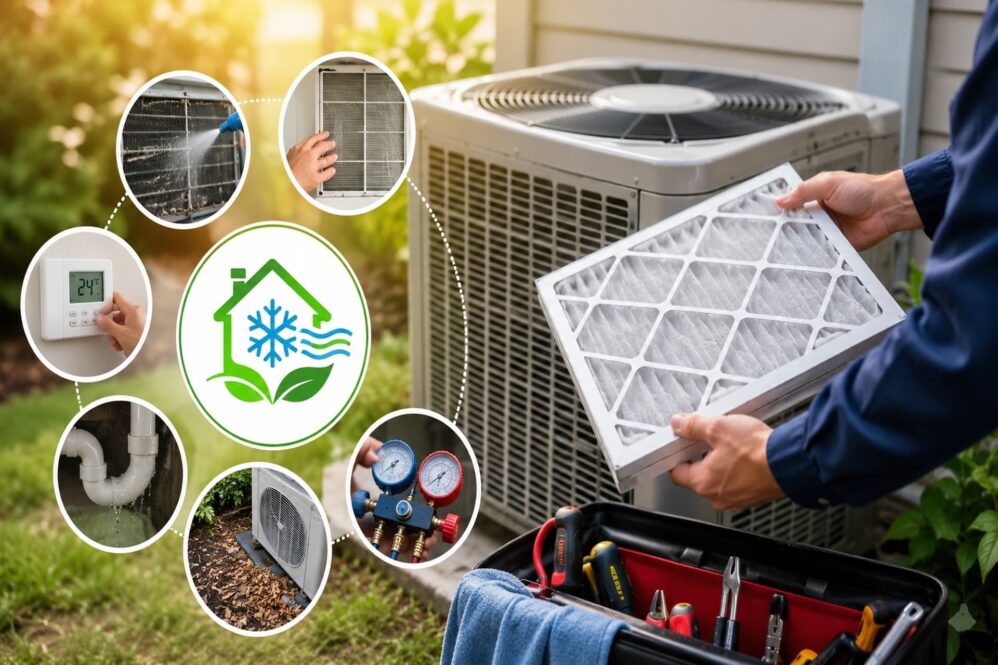
One of the simplest and most important AC maintenance tasks is changing the air filter regularly. Dirty filters restrict airflow, forcing the system to work harder to circulate cool air.
Restricted airflow can lead to:
- Reduced cooling efficiency
- Increased energy consumption
- Dust buildup inside the system
- Poor indoor air quality
- Extra strain on the blower motor
Most standard filters should be replaced every one to three months depending on usage, pets, indoor air quality, and household conditions. Homes with pets or allergy sufferers may benefit from more frequent filter changes.
Clean filters improve airflow, support healthier indoor air, and help the air conditioner cool more effectively.
Keep the Outdoor Unit Clean
The outdoor condenser unit plays a critical role in releasing heat from the home. Dirt, leaves, grass clippings, and debris around the unit can restrict airflow and reduce system performance.
To help the outdoor unit operate efficiently:
- Keep at least two feet of open space around the unit
- Remove leaves, weeds, and debris regularly
- Gently rinse dirt from the condenser coils
- Trim nearby shrubs or plants
A clean outdoor unit allows heat to transfer more efficiently, helping the system cool the home faster while using less energy.
Check Air Vents and Airflow
Blocked or closed vents can create uneven cooling and unnecessary pressure inside the HVAC system. Furniture, rugs, curtains, or dust buildup may interfere with proper airflow throughout the home.
Walk through the property periodically and make sure:
- Supply vents remain open and unobstructed
- Return vents are clean and clear
- Airflow feels consistent between rooms
Balanced airflow helps the system distribute cool air evenly while preventing the unit from overworking.
Clean the Evaporator and Condenser Coils
Over time, dirt and dust can accumulate on both indoor evaporator coils and outdoor condenser coils. Dirty coils reduce the system’s ability to absorb and release heat efficiently.
When coils become heavily coated with debris, homeowners may notice:
- Longer cooling cycles
- Reduced airflow
- Higher energy bills
- Poor cooling performance
Light cleaning can sometimes be handled carefully at home, but deeper coil cleaning is usually best performed during professional AC maintenance appointments.
Monitor Thermostat Performance
The thermostat controls how and when the cooling system operates. Incorrect thermostat settings or calibration problems can cause the system to run longer than necessary.
To improve cooling efficiency:
- Use programmable or smart thermostat settings
- Avoid setting temperatures extremely low
- Keep the thermostat away from direct sunlight
- Replace thermostat batteries if needed
Smart thermostat systems can help reduce unnecessary energy usage by automatically adjusting cooling schedules throughout the day.
Inspect the Drain Line
Air conditioning systems remove moisture from indoor air, and that moisture drains through a condensate line. Over time, algae, dirt, or debris can clog the drain line and cause water leaks or humidity issues.
Signs of a clogged drain line may include:
- Water pooling near the indoor unit
- Musty smells
- Increased indoor humidity
- Water damage around the system
Routine drain line cleaning helps prevent moisture problems and supports healthier indoor conditions.
Watch for Warning Signs of AC Problems
Many cooling issues begin with small warning signs that gradually become more serious. Recognising these symptoms early can help prevent expensive repairs.
Homeowners should pay attention to:
- Weak airflow
- Strange noises
- Warm air coming from vents
- Frequent cycling
- Unusual odours
- Sudden increases in energy bills
- Uneven cooling between rooms
Ignoring early warning signs can allow minor problems to become major system failures over time.
Schedule Professional AC Maintenance
While homeowners can handle basic upkeep, professional servicing remains essential for long-term performance. A trained HVAC technician can inspect components that are difficult or unsafe to access without specialised tools.
Professional maintenance often includes:
- Refrigerant level checks
- Electrical inspections
- Coil cleaning
- Motor and fan testing
- Thermostat calibration
- Safety inspections
- System performance testing
Seasonal tune-ups help identify worn parts early while improving efficiency and extending system lifespan.
Improve Energy Efficiency Beyond Maintenance
AC maintenance works best when combined with smart energy-saving habits throughout the home.
Additional ways to reduce cooling costs include:
Improve Home Insulation
Proper insulation reduces heat transfer and helps cool air remain inside longer.
Seal Air Leaks
Small gaps around doors and windows can force the system to work harder.
Use Ceiling Fans
Fans help circulate cool air more effectively and reduce strain on the AC system.
Limit Indoor Heat Sources
Cooking appliances, electronics, and direct sunlight can increase indoor temperatures.
Close Curtains During Peak Heat
Blocking sunlight during the hottest part of the day helps maintain more stable indoor temperatures.
How Maintenance Extends System Lifespan
Air conditioning systems represent a major household investment. Preventive maintenance reduces wear on critical components, helping systems last longer before replacement becomes necessary.
Systems that receive consistent maintenance often experience:
- Fewer breakdowns
- Better cooling consistency
- Lower operating costs
- Improved indoor comfort
- Longer equipment lifespan
Even small maintenance habits performed regularly can protect the system from unnecessary stress over time.
Reader Questions
How often should AC air filters be replaced?
Most AC air filters should be replaced every one to three months. Homes with pets, allergies, or heavy AC usage may require more frequent filter changes for proper airflow and air quality.
Why is my air conditioner running but not cooling properly?
Poor cooling may result from dirty filters, blocked vents, low refrigerant levels, dirty coils, or thermostat issues. Professional inspection can identify the exact cause and restore proper performance.
Does AC maintenance help lower electricity bills?
Yes. Regular maintenance improves airflow and system efficiency, allowing the air conditioner to cool the home using less energy and reducing monthly utility costs.
How often should professional AC maintenance be scheduled?
Most HVAC professionals recommend scheduling air conditioning maintenance once or twice each year, ideally before peak summer temperatures begin.
What are common signs an AC system needs servicing?
Weak airflow, unusual noises, warm air, rising energy bills, unpleasant odours, and uneven cooling are common signs that professional AC servicing may be needed.
Wrapping Up
Air conditioning maintenance does far more than improve cooling performance. It helps lower energy costs, supports healthier indoor air quality, reduces strain on HVAC components, and extends the life of the system. From changing filters and cleaning coils to checking airflow and scheduling professional servicing, routine care plays a major role in keeping cooling systems operating efficiently year-round.
As energy costs continue to rise, preventive AC maintenance remains one of the most practical ways homeowners can improve comfort while reducing unnecessary expenses. Addressing small issues early helps prevent larger repairs later and keeps indoor spaces consistently cool, comfortable, and reliable during warmer seasons.