
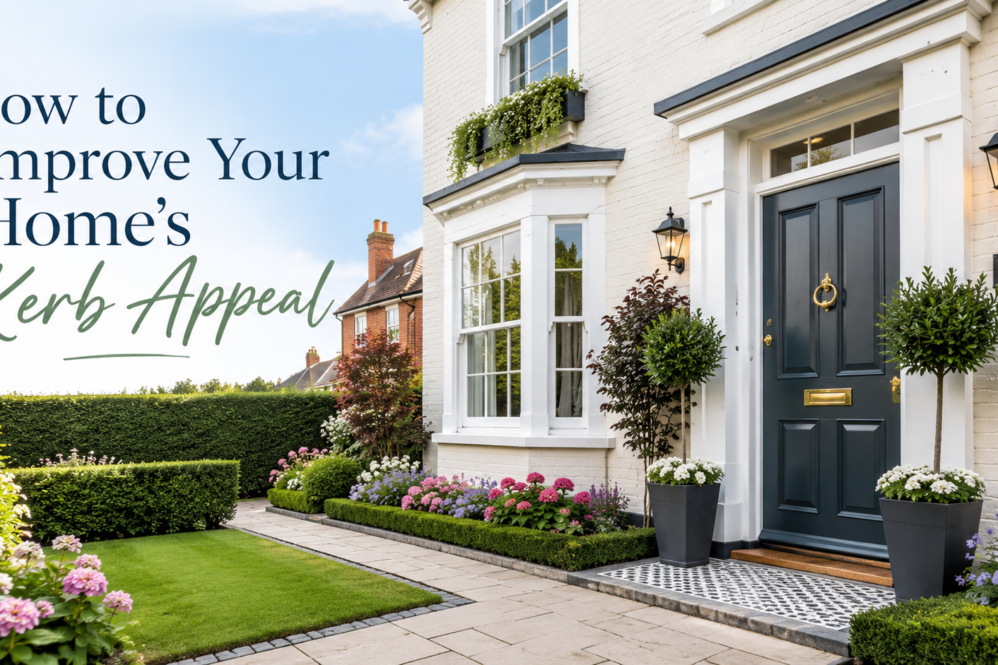
The outside of your home tells a story before anyone even reaches the front door. A clean path, healthy plants, a fresh coat of paint on the door, and well-kept surfaces all signal the same thing: this is a home someone genuinely takes care of. That impression matters, whether you’re selling up or simply want to feel a bit prouder every time you turn onto your street.
The good news is that boosting kerb appeal rarely means a full renovation. Most of the time, it’s a series of small, practical fixes — a clean driveway, a repainted door, a trimmed hedge, a working outdoor light — that add up to a completely different first impression. Here’s how to work through it methodically, without wasting money on the wrong things first.
Start by Looking at Your Home From the Street
Before you buy a single tin of paint or plant, step across the road and actually look at your house the way a stranger would.
It’s easy to stop noticing the small stuff when you walk past it every day. Try to see your home with fresh eyes — or better yet, take a few photos. Problems that barely register in person have a habit of jumping out in a picture.
Look out for:
- Peeling paint
- Overgrown hedges or shrubs
- Dirty windows
- Cracked paving
- Weeds pushing through the driveway
- Loose or sagging gutters
- Faded house numbers
- Clutter near the entrance
- Broken outdoor lights
- Stained walls or fencing
Once you’ve got a clear list of what actually needs attention, deal with cleaning and repairs first. Decoration comes later.
Give the Front Door More Attention
The front door draws the eye more than almost anything else on the front of a house, so it’s worth getting right.
If the door is structurally sound, a fresh coat of paint might be all it needs. Classic shades — black, navy, deep green — tend to look sharp and timeless, while bolder colours can add real personality if the property suits it. The right choice usually comes down to matching the door to the brickwork, render and roofline, rather than picking a colour in isolation.
Hardware makes a difference too. Swapping a tired handle, knocker, letterbox or house number for something newer can lift the whole entrance without touching the door itself.
Don’t forget the small stuff around it — a clean doorstep, no cobwebs, and porch lighting that actually works.
Clean the Exterior Before Replacing Anything
Before you spend money replacing things, clean what you already have. It’s often the cheapest, highest-impact fix available.
Dirt, moss and algae build up so gradually that most homeowners don’t clock just how much the exterior has faded. Give attention to:
- Paving and steps
- Driveways
- Garden walls and gates
- Exterior doors
- Window frames and fascias
- Garage doors
Pressure washing works well on many hard surfaces, but go carefully — too much force can strip paint, damage mortar or chip certain types of paving. For anything delicate, a gentler hand-clean is usually the safer bet.
Quite often, a proper clean does the job on its own, and repainting or replacing turns out to be unnecessary.
Keep the Front Garden Simple and Tidy
You don’t need elaborate landscaping to make a front garden look good — in fact, simplicity usually wins. A clean, calm layout reads as more intentional than a busy one.
Start by clearing out weeds, dead plants and cracked pots. Trim back anything blocking windows, the path or the entrance.
If the space feels bare, layer in plants of different heights and textures. Evergreens give you year-round structure, while seasonal flowers bring in colour when it matters most. Where space is tight, a couple of large containers near the entrance can do a lot of visual work.
Just make sure whatever you plant actually suits the light, space and climate you’re working with — plants that constantly struggle will make the garden look neglected no matter how often you tend to them.
Improve the Lawn
A well-kept lawn acts as the backdrop for everything else in the garden, so it’s worth the regular effort.
Mowing, edging and clearing fallen leaves make an immediate visual difference. Patchy areas benefit from reseeding, and weeds are best dealt with before they spread.
Pay particular attention to the edges — a crisp line between grass, beds and paths does more for the “well-maintained” look than almost anything else in the garden.
If keeping natural grass alive is a constant battle, it might be worth shrinking the lawn and swapping part of it for planting beds, gravel or paving instead of fighting the same losing fight every season.
Make the Path to the Front Door Inviting
The route from the pavement to your door should feel obvious and easy to walk, not like an obstacle course.
Cracked slabs, weeds and uneven surfaces don’t just look bad — they’re a genuine trip hazard. Replace damaged paving, clear weeds from the joints, and top up gravel paths that have thinned out over time.
Think about how someone naturally walks toward your door, and let plants and features frame that route rather than crowd it. If you’ve got the space, a pair of matching planters either side of the entrance is a simple way to visually mark the arrival point.
Refresh Your Driveway
Because the driveway usually takes up so much of the front of a property, its condition has an outsized effect on how the whole house reads from the street.
Start simple: sweep away leaves and debris, pull any weeds, and treat oil stains or tyre marks where you can. Top up and redistribute loose gravel, and for block paving, a clean plus fresh jointing sand can make an old driveway look new again.
If there’s serious cracking or sinking, that’s worth calling in a professional for — small defects tend to stand out more once everything around them looks sharp.
And resist turning the driveway into storage. Bins, tools, spare building materials and kids’ outdoor toys pile up fast and make even a well-maintained frontage look cluttered.
Improve Exterior Lighting
Outdoor lighting isn’t just decorative — it helps people find your door safely and adds a layer of security after dark.
Wall lights either side of the entrance are usually enough for smaller homes, while larger properties might benefit from lighting along the path or highlighting key architectural features. Stick to simple fittings that suit your home’s style; ornate or trendy designs tend to age badly.
Warm, soft lighting generally feels more welcoming than harsh security-style floodlights, though motion-activated lights still earn their place around driveways, garages and side entrances where brighter bursts of light are genuinely useful.
Clean the Windows and Frames
Clean glass makes a house look brighter, sharper and better cared for almost instantly.
Wash the windows regularly, and don’t skip the frames and sills, where grime tends to build up unnoticed. Timber frames may need repainting or resealing occasionally, while uPVC usually just needs a good clean — though cracked panes or failed seals should be repaired rather than ignored.
It’s also worth checking what’s visible from the street. Uneven blinds, cluttered windowsills or tired curtains can undercut an otherwise tidy exterior, so aim for a reasonably consistent look across the front-facing windows.
Check Your Roof, Gutters and Fascias
It’s easy to focus entirely on ground level and forget to look up — but the roofline matters just as much.
Step back and check for missing or damaged tiles, blocked gutters, peeling fascia boards, and any guttering that looks loose or uneven.
This isn’t purely cosmetic, either. Overflowing gutters can stain exterior walls and, left long enough, contribute to damp or water damage. Keeping them clear protects the building as well as its appearance.
If access is tricky or the damage looks significant, this is one job worth handing to a professional rather than tackling from a ladder yourself.
Refresh Fences, Gates and Walls
Boundary features frame the whole property, so a rusting gate or sagging fence can undo the effect of everything else you’ve fixed.
Wash down fences and walls, repair any loose sections, and repaint or treat timber that’s faded in the sun. Make sure gates open and close smoothly — tighten loose hinges and swap out broken catches.
If you’re installing new fencing, think about scale. Very tall, heavy fencing can make a small front garden feel boxed in, while a lower boundary often opens the space up. And if you’re planning major boundary changes, especially near a road, it’s worth checking local planning rules first.
Hide Bins Without Making Them Difficult to Use
Wheelie bins are essential but rarely photogenic. Where possible, tuck them to the side of the property, or invest in a simple screen or enclosure.
The goal is to keep them out of view from the street while still making them easy to wheel out on collection day. Try to avoid parking large bin storage right next to the front door — it tends to dominate the entrance and make it feel cramped.
Make House Numbers Easy to See
It’s a small detail, but a genuinely useful one. Visitors, delivery drivers and emergency services all rely on being able to spot your house number quickly.
Replace anything faded, cracked or outdated, and position the numbers somewhere clearly visible from the street. Contrast matters most here — dark numbers vanish against dark brick, and pale numbers disappear against white render. Simple, clear lettering will always outperform anything overly decorative.
Repair Exterior Paint and Render
Peeling paint and cracked render are two of the fastest ways to make a well-kept home look neglected.
Small patches of damaged paint can often be touched up without repainting the whole surface — just match the existing finish carefully. Render should be checked for cracking, staining or signs of damp, since minor cosmetic cracks are usually straightforward, but larger or recurring ones deserve a proper look before you cover them up.
It’s worth saying clearly: painting over a moisture or structural issue only hides it temporarily. It doesn’t fix anything underneath.
Use Outdoor Accessories Carefully
A few well-chosen touches — a smart doormat, an attractive planter, a simple wreath — can make an entrance feel warmer without tipping into clutter.
Try to keep colors and materials consistent across the front of the house. Matching black hardware on the door, house numbers and light fittings, for example, creates a coordinated look almost effortlessly.
The instinct to add more is usually the wrong one. Strong kerb appeal comes from cleanliness and proportion far more often than it comes from decoration.
Think About Kerb Appeal Through the Seasons
Your home won’t look the same in July as it does in January, and that’s worth planning for.
Spring and summer bring natural color and greenery, while autumn leaves and winter weather can make a garden look untidy fast. Mixing seasonal flowers with evergreen shrubs or structural planting helps keep the exterior looking decent year-round.
In autumn, clear fallen leaves regularly so paths stay visible and safe underfoot. In winter, remove dead plants and broken pots rather than letting them sit until spring — small neglected details accumulate faster than people expect.
Prioritise Repairs Before Cosmetic Improvements
If your budget is tight, spend it on maintenance before decoration — always.
A new planter won’t distract from a broken gutter. Fresh door paint won’t make up for cracked paving right outside the entrance. Work through improvements in this order:
- Repair anything broken or unsafe.
- Clean exterior surfaces.
- Remove weeds and clutter.
- Improve paintwork and finishes.
- Add plants and decorative touches.
This sequence works because every later step builds on a base that’s already clean and sound — skip ahead, and the decoration just draws attention to what’s still broken underneath.
Improving Kerb Appeal When Selling Your Home
Kerb appeal carries extra weight when a property’s on the market, because buyers form an opinion before they’ve even reached the front door.
A scruffy exterior plants doubt — if the outside hasn’t been looked after, buyers naturally wonder what else has been neglected inside. You don’t need to redesign the whole frontage to counter that; you just need it to look clean, cared for and easy to maintain.
Clean windows, tidy planting, a swept driveway, a freshly painted door and working outdoor lights usually do more for buyer perception than expensive decorative additions ever will. It’s also worth toning down anything highly personal before viewings start — neutral, broadly appealing choices make it easier for buyers to picture the place as their own.
How Much Should You Spend on Kerb Appeal?
There’s no set budget that applies to every home, and there doesn’t need to be.
Some of the most effective changes cost next to nothing — cleaning, weeding, decluttering and small paint touch-ups can transform how a property looks without touching a big budget. Bigger spends only really make sense where something is genuinely damaged: unsafe paving, a leaking roof, or windows that are past saving.
A useful way to decide is to separate essential repairs from optional cosmetic work, and if you’re preparing to sell, ask yourself honestly whether a given upgrade is likely to sway a buyer — or whether it’s really just reflecting your own taste.
Small Details Often Create the Biggest Difference
Kerb appeal is almost never about one big, expensive feature. It’s the accumulation of small, consistent details — clean windows, straight fencing, healthy plants, tidy paths, a well-kept entrance — that together signal a home is properly looked after.
Work from the biggest visual problems down to the smallest finishing touches. Once the main issues are sorted, decorative additions suddenly do a lot more work than they would have on a messier canvas.
FAQ
What’s the cheapest way to improve kerb appeal? Cleaning. Washing down paving, windows, fences and the driveway costs very little and often removes years of built-up grime that was quietly ageing the whole property.
How much does kerb appeal actually affect a home’s value? It won’t change a survey report, but it strongly shapes first impressions — and first impressions influence how generously a buyer views everything else, from the price they’re willing to offer to how quickly they make a decision.
Should I repaint my front door before selling? Usually yes, if the current paintwork is faded, chipped or an unusual colour. A neutral, well-applied colour is a low-cost way to freshen the entrance and appeal to a wider range of buyers.
Do I need professional landscaping to improve kerb appeal? No. Simple, well-maintained planting almost always looks better than elaborate landscaping that isn’t kept up. Tidiness matters far more than complexity.
How often should I maintain my home’s exterior? Treat it as ongoing upkeep rather than a one-off project — a quick seasonal check, regular cleaning, and prompt small repairs will keep problems from building up into bigger, costlier jobs.
What should I fix first if my budget is limited? Anything broken, unsafe or actively causing damage — like a leaking gutter or cracked paving — before spending anything on decoration. Repairs protect the property; decoration just makes it look nicer.
Conclusion
Improving your home’s kerb appeal doesn’t call for a big renovation budget or a total redesign. It calls for attention — noticing what’s peeling, cracked, overgrown or cluttered, and working through those issues in the right order, starting with repairs and cleaning before moving on to paint, planting and decorative touches.
Focus on the areas people notice first: the front door, the garden, the driveway, the windows and the path to your entrance. Keep the overall look simple and consistent with your home’s style, because clean surfaces, healthy plants and clear pathways will always do more for a property’s appearance than expensive extras.
Most of all, treat kerb appeal as something you maintain, not something you finish. A bit of regular trimming, cleaning and repairing will keep your home looking genuinely welcoming all year round — not just for the week you decide to put it on the market.
tion required.