
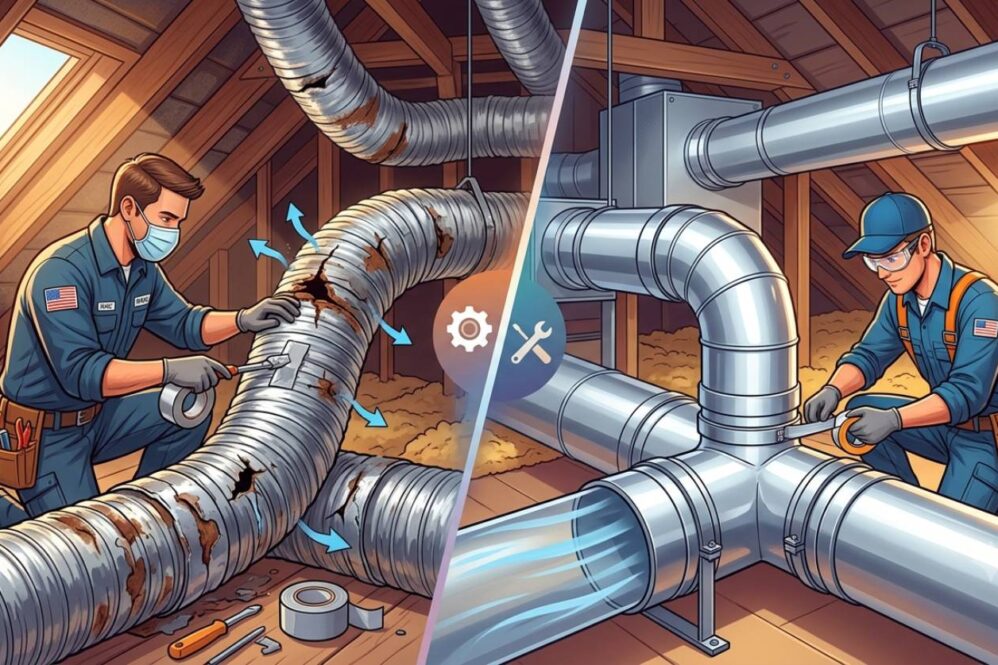
Your home’s ductwork is one of the most important parts of your heating and cooling system, even though you rarely see it. Hidden behind walls, ceilings, and in attics or crawl spaces, air ducts carry conditioned air to every room in your home. When they are working properly, you enjoy consistent temperatures, good airflow, and better indoor air quality. However, as ductwork ages, it can develop leaks, loose connections, rust, or physical damage that affects your home’s comfort and energy efficiency. If you’re experiencing airflow problems, working with an air duct installation company Memphis can help you determine whether repairing or replacing your ductwork is the right solution.
Many homeowners assume damaged ducts automatically need to be replaced, but that isn’t always true. In many cases, repairing a few damaged sections is enough to restore proper airflow and improve HVAC performance. On the other hand, older duct systems with widespread damage may benefit more from complete replacement. Understanding the difference between these two options helps you make an informed decision that balances comfort, efficiency, and long-term value.
Why Healthy Ductwork Matters
Your ductwork acts as the delivery system for your heating and cooling equipment. Every time your furnace or air conditioner runs, conditioned air travels through the ducts before reaching each room. If the duct system is properly sealed and in good condition, the air arrives efficiently, helping maintain consistent temperatures throughout your home.
When ducts become damaged, however, conditioned air can escape before it reaches its destination. This forces your HVAC system to work harder to maintain the desired temperature, increasing energy use while reducing comfort. Damaged ductwork may also allow dust, insulation particles, or other contaminants to enter the airflow, affecting the overall quality of the air inside your home. Keeping your ducts in good condition supports both energy efficiency and healthier indoor living.
When Air Duct Repair Is the Right Choice
Air duct repair is often the best option when the damage is limited to a few areas. Small air leaks, loose joints, disconnected sections, or worn seals can usually be repaired without replacing the entire duct system. These repairs help restore airflow while preventing conditioned air from escaping into unused spaces like attics or crawl spaces.
Repairing isolated problems is generally more affordable than installing all new ductwork. Once leaks are sealed and damaged sections are fixed, your HVAC system can often operate more efficiently again. If the majority of the duct system remains structurally sound, repairs can extend its lifespan and improve comfort without requiring a major investment.
Signs Your Ductwork May Need Repairs
Air duct problems usually develop gradually rather than appearing overnight. Small leaks or loose connections may not seem serious at first, but they can slowly reduce airflow throughout your home. As more conditioned air escapes from the system, your HVAC equipment must run longer to keep your home comfortable. This extra workload can increase utility bills while placing additional strain on important heating and cooling components.
Many homeowners first notice the effects through uneven temperatures or higher energy costs rather than visible damage. Paying attention to these changes allows problems to be addressed before they become more extensive. A professional inspection can identify whether simple repairs will restore performance or if larger issues are beginning to develop.
Common signs your ductwork may need repairs include:
- Some rooms feel warmer or cooler than the rest of the house.
- Airflow from certain vents feels weak or inconsistent.
- Your HVAC system runs longer than normal.
- Utility bills continue to increase without another obvious explanation.
- You hear whistling, rattling, or vibrating sounds inside the ductwork.
- Dust collects quickly around supply vents and furniture.
- Visible gaps or disconnected duct sections are present in accessible areas.
- Certain rooms never seem to reach the desired temperature.
When Full Air Duct Replacement Makes More Sense
While repairs are effective for minor problems, they are not always the best long-term solution. Older duct systems with widespread leaks, severe rust, crushed sections, or extensive deterioration may continue experiencing problems even after individual repairs are completed. In these situations, replacing the entire duct system often provides greater reliability and improved performance.
Homes with outdated duct designs may also benefit from replacement. Older duct layouts sometimes restrict airflow or fail to distribute conditioned air evenly throughout the house. Installing new ductwork allows the entire system to be redesigned for better airflow, helping every room receive the right amount of heated or cooled air.
The Benefits of Installing New Ductwork
Replacing ductwork requires a larger investment, but it can provide significant long-term advantages. Modern duct systems are built with improved materials and are designed to reduce air leakage while supporting better airflow throughout the home. Properly sealed ducts help ensure conditioned air reaches your living spaces instead of escaping into unused areas.
New ductwork can also improve indoor air quality by reducing the amount of dust and debris entering the airflow. Better airflow means your HVAC equipment doesn’t need to run as long to maintain comfortable temperatures, which may help reduce energy consumption while placing less wear on important system components over time.
How HVAC Professionals Decide Between Repair and Replacement
Choosing the right solution begins with a thorough inspection of the entire duct system. HVAC professionals evaluate the condition of the ducts, inspect for leaks, check insulation, measure airflow, and look for signs of age or structural damage. They also consider whether problems are isolated to a few sections or spread throughout the entire system.
Rather than recommending replacement automatically, technicians compare the cost of repairs with the remaining lifespan of the ductwork. If repairs can restore efficient performance for many years, they may recommend fixing only the damaged sections. If widespread deterioration is present, replacement often provides better value and fewer future repair costs.
How Regular Maintenance Extends Duct Life
Although air ducts are designed to last for many years, regular maintenance helps keep them performing efficiently. Routine HVAC inspections allow technicians to identify loose connections, small leaks, damaged insulation, or developing airflow problems before they become major repairs. Replacing air filters regularly also helps reduce dust buildup inside the duct system, allowing air to move more freely throughout the home.
Homeowners can also help protect their ductwork by paying attention to changes in airflow, unusual sounds, or increasing energy bills. Addressing these warning signs early often prevents larger problems while helping the heating and cooling system continue operating efficiently for years to come.
Final Thoughts
Choosing between air duct repair and full replacement depends on the overall condition of your duct system rather than a single damaged section. Minor leaks, loose connections, and isolated damage can often be repaired successfully, restoring airflow and improving efficiency without replacing the entire network. However, older ductwork with widespread deterioration may benefit more from a complete replacement that delivers better comfort, cleaner airflow, and greater long-term reliability.
A professional inspection is the best way to determine which option makes the most sense for your home. By carefully evaluating the condition of your ductwork and identifying the source of airflow problems, an HVAC professional can recommend the most practical solution. Whether your ducts need a simple repair or a complete replacement, taking action early helps improve indoor comfort, supports better air quality, and allows your heating and cooling system to operate more efficiently throughout the year.