Introduction
Air conditioning plays a major role in keeping homes comfortable, especially during hot summer months. However, many homeowners notice their energy bills climbing higher every year. Often, the cause is not the temperature outside but how efficiently the air conditioning system operates. Even small inefficiencies can force your AC unit to work harder, increasing electricity consumption and reducing the lifespan of important components.
Improving air conditioner efficiency does not always require expensive upgrades or major home renovations. In many cases, simple maintenance habits and small adjustments around the house can significantly improve cooling performance. By understanding how your system works and taking proactive steps to maintain it, homeowners can enjoy better indoor comfort while keeping utility costs under control.
The following practical tips explain how to improve AC efficiency, extend the life of your cooling system, and maintain a comfortable home environment throughout the hottest months of the year.
Why Air Conditioning Efficiency Matters for Homeowners
An efficient air conditioning system does more than cool your home. It supports consistent indoor temperatures, improves air circulation, and helps reduce humidity levels. When an AC unit operates efficiently; it cools spaces faster and uses less energy to maintain comfortable conditions.
Poor efficiency, on the other hand, leads to several common problems. Energy bills increase because the system must run longer to reach the desired temperature. Components experience more wear and tear, which can result in costly repairs or premature system failure. Rooms may also cool unevenly, leaving certain areas uncomfortable.
Homeowners who prioritize efficiency benefit from improved comfort, lower monthly expenses, and longer equipment lifespan. Efficient systems also reduce environmental impact by consuming less electricity and lowering household energy demand.
Keep Your Air Filters Clean and Replace Them Regularly
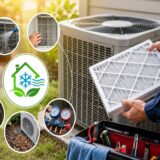
One of the simplest ways to improve air conditioning efficiency is by keeping the air filter clean. The filter plays a critical role in maintaining proper airflow throughout the HVAC system. When filters become clogged with dust, pollen, or debris, airflow becomes restricted, forcing the system to work harder to push cooled air through the home.
Reduced airflow can cause several issues. Cooling performance decreases, energy consumption rises, and indoor air quality may decline. In severe cases, clogged filters can even lead to frozen evaporator coils or system overheating.
Most HVAC professionals recommend checking air filters every month during peak cooling season. In many homes, replacing the filter every one to three months keeps the system operating efficiently. Homes with pets or higher dust levels may require more frequent replacement.
A clean filter allows air to move freely through the system, helping the AC cool more effectively while reducing unnecessary strain on the equipment.
Schedule Regular Professional AC Maintenance
While routine tasks like filter replacement help maintain efficiency, professional inspections are equally important. During scheduled maintenance visits, technicians perform a detailed system check that ensures all components are operating correctly.
Maintenance typically includes cleaning condenser and evaporator coils, checking refrigerant levels, tightening electrical connections, and inspecting system performance. These steps help prevent small problems from developing into expensive repairs later.
Many homeowners choose to schedule seasonal inspections with an experienced AC contractor in Chandler, AZ who can evaluate system performance and recommend improvements. Regular professional servicing keeps cooling systems operating at peak efficiency and helps extend their operational lifespan.
Routine maintenance also provides peace of mind. Technicians can detect worn parts, airflow issues, or refrigerant imbalances before they begin affecting system performance.
Improve Home Insulation to Reduce Cooling Loss
Air conditioning systems work best when cool air remains inside the home. Poor insulation allows cooled air to escape and warm air to enter, forcing the system to run longer than necessary.
Improving insulation is one of the most effective ways to support HVAC efficiency. Attic insulation, in particular, plays a major role in maintaining indoor temperatures. Heat that enters through the roof can quickly warm indoor spaces, increasing the cooling demand on the system.
Sealing gaps around doors, windows, and ductwork also prevents air leaks. Weather stripping and caulking can reduce unwanted airflow that allows cooled air to escape outdoors. Even small improvements in insulation can significantly reduce cooling loss.
Homeowners who combine strong insulation with efficient HVAC operation often notice improved comfort and lower energy bills throughout the cooling season.
Use Smart Thermostats to Optimize Cooling
Modern thermostats offer powerful tools for improving energy efficiency. Programmable and smart thermostats allow homeowners to automatically adjust cooling schedules based on daily routines.
For example, temperatures can be raised slightly during the day when the home is empty and lowered again in the evening when occupants return. This simple adjustment reduces unnecessary cooling without sacrificing comfort.
Smart thermostats can also learn household habits and automatically optimize temperature settings. Some models provide energy usage reports that help homeowners identify opportunities for further efficiency improvements.
Proper thermostat placement is also important. Thermostats should be installed away from direct sunlight, vents, or heat-producing appliances that could cause inaccurate temperature readings.
When used correctly, smart thermostats help reduce energy consumption while maintaining consistent indoor comfort.
Keep Outdoor AC Units Clean and Unobstructed
The outdoor condenser unit plays a critical role in removing heat from your home. If the condenser cannot release heat effectively, the entire air conditioning system becomes less efficient.
Leaves, grass clippings, dirt, and debris often accumulate around outdoor units. These obstructions restrict airflow and prevent the condenser from operating properly. Over time, this can lead to reduced cooling capacity and higher energy consumption.
Homeowners should regularly inspect the outdoor unit and keep the surrounding area clear. Maintaining at least two feet of open space around the condenser helps ensure proper airflow. Trimming nearby plants and removing debris allows the unit to function efficiently.
Routine cleaning combined with professional servicing helps prevent overheating and keeps the cooling system running smoothly.
If homeowners notice reduced cooling performance, consulting a qualified AC contractor in Chandler, AZ can help identify whether outdoor airflow issues or other mechanical concerns are affecting system efficiency.
Know When Your AC System Needs Professional Attention
Even with proper maintenance, air conditioning systems eventually show signs of wear. Recognizing early warning signals can prevent larger problems from developing.
Common signs of declining efficiency include weak airflow, uneven cooling between rooms, rising energy bills, and unusual noises during operation. Systems that frequently cycle on and off may also be struggling to maintain consistent temperatures.
Ignoring these signs can allow minor issues to escalate into expensive repairs. When homeowners notice persistent performance problems, professional inspection is recommended.
An experienced AC contractor in Chandler, AZ can diagnose the underlying cause, whether it involves airflow restrictions, refrigerant issues, electrical components, or aging equipment. Prompt attention ensures the system continues operating safely and efficiently.
Conclusion
Air conditioning efficiency plays a major role in maintaining a comfortable and cost-effective home environment. When cooling systems operate properly, they use less energy, provide consistent temperatures, and reduce the likelihood of expensive repairs. Fortunately, improving AC performance does not require complex changes. Many of the most effective strategies involve simple maintenance habits and thoughtful home improvements.
Regularly replacing air filters, scheduling professional inspections, improving insulation, and maintaining clear airflow around outdoor units can dramatically improve system performance. Smart thermostats also provide homeowners with greater control over cooling schedules, helping reduce unnecessary energy consumption.
By combining these practices with guidance from qualified HVAC professionals, homeowners can ensure their air conditioning systems remain reliable and efficient for many years. Taking proactive steps today not only lowers energy bills but also protects the long-term health of one of the most important systems in the home.