Modern homes are built to be more energy efficient than ever, but tighter construction also means indoor air can become trapped, stale, and polluted if ventilation is not properly managed. Many homeowners focus on heating and cooling systems while overlooking ventilation, even though airflow plays a major role in comfort, humidity control, energy efficiency, and indoor air quality.
A well-designed ventilation system helps remove stale air, reduce indoor pollutants, control moisture, and improve overall comfort throughout the home. Whether dealing with excessive humidity, lingering odours, allergens, or uneven airflow, upgrading ventilation can create a healthier and more balanced indoor environment.
Why Proper Ventilation Matters in Modern Homes
Indoor air quality has become an increasingly important concern because people spend a significant amount of time indoors. Without proper ventilation, contaminants such as dust, pet dander, cooking fumes, cleaning chemicals, and excess moisture can accumulate inside the home.
Poor ventilation often leads to problems such as:
- Stuffy or stale indoor air
- Excess humidity and condensation
- Uneven room temperatures
- Persistent odours
- Increased allergens and airborne particles
- Mould and mildew growth
- Reduced HVAC efficiency
Proper airflow helps fresh outdoor air circulate while removing polluted indoor air. This balance supports both comfort and long-term home health.
Signs Your Home May Need Ventilation Upgrades
Many ventilation issues develop gradually, making them easy to ignore at first. Homeowners often notice symptoms without realising airflow problems are the underlying cause.
Some common warning signs include:
Excess Indoor Humidity
If windows regularly fog up or moisture appears around vents and walls, ventilation may not be removing humid air effectively. Excess humidity can eventually damage paint, wood, insulation, and drywall.
Persistent Odours
Lingering cooking smells, musty odours, or stale air often indicate poor air exchange inside the home.
Uneven Airflow
Some rooms may feel stuffy while others feel overly warm or cold. This can point to airflow restrictions, outdated ductwork, or inadequate ventilation design.
Increased Allergy Symptoms
Poor indoor air circulation can allow dust, pollen, pet dander, and other allergens to build up indoors.
Exhaust Ventilation Systems for Moisture and Odour Control
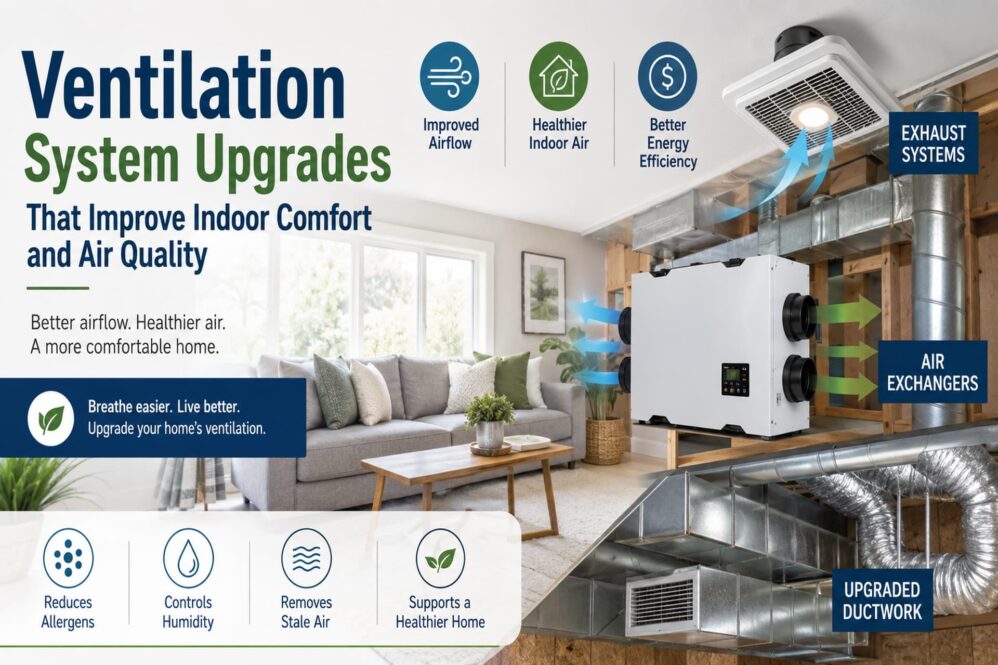
Exhaust ventilation systems are among the most common and effective upgrades for improving indoor air quality. These systems remove indoor air directly from high-moisture or high-pollution areas.
Bathrooms, kitchens, laundry rooms, and basements benefit most from targeted exhaust ventilation.
Bathroom Exhaust Fans
Bathroom fans help remove steam and moisture generated during showers and baths. Without proper ventilation, moisture can lead to mould growth, peeling paint, and mildew.
Modern exhaust fans are quieter, more energy efficient, and better at controlling humidity than older models.
Kitchen Range Hoods
Cooking releases smoke, grease particles, moisture, and airborne pollutants into the air. A properly vented kitchen range hood helps remove these contaminants before they spread throughout the home.
Upgrading to a higher-capacity range hood can noticeably improve kitchen comfort and air cleanliness.
Whole-Home Ventilation Systems
Some homes require more than spot ventilation. Whole-home ventilation systems provide consistent airflow throughout the property while improving indoor air exchange.
These systems are especially useful in tightly sealed, energy-efficient homes.
Heat Recovery Ventilators (HRVs)
Heat recovery ventilators exchange stale indoor air with fresh outdoor air while retaining much of the home’s indoor heat during colder months.
This process improves air quality without causing significant energy loss.
HRVs work particularly well in colder climates where homes remain closed for long periods during winter.
Energy Recovery Ventilators (ERVs)
Energy recovery ventilators function similarly to HRVs but also help manage humidity levels. They transfer both heat and moisture between incoming and outgoing air streams.
ERV systems are often ideal in humid climates because they help reduce excess indoor moisture while maintaining comfort.
Upgrading Ductwork for Better Airflow
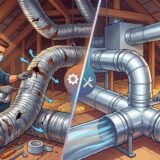
Ventilation performance depends heavily on duct condition and design. Older duct systems may leak air, restrict airflow, or distribute air unevenly throughout the home.
Upgrading ductwork can improve both ventilation and HVAC efficiency.
Sealing Air Leaks
Leaky ducts allow conditioned air to escape into attics, crawl spaces, or walls. Sealing duct leaks helps improve airflow consistency while reducing energy waste.
Improving Duct Layout
Some homes have poorly designed duct layouts that create airflow imbalances. Updating duct sizing or rerouting sections can improve air circulation across the entire property.
Cleaning and Insulating Ducts
Dust buildup inside ductwork can reduce airflow and affect indoor air quality. Professional duct cleaning may help restore airflow in heavily contaminated systems.
Proper duct insulation also helps maintain air temperature and reduce condensation.
Smart Ventilation Technology and Modern Controls
Modern ventilation upgrades now include smart controls that automatically adjust airflow based on indoor conditions.
Smart ventilation systems may monitor:
- Humidity levels
- Indoor air pollutants
- Carbon dioxide levels
- Temperature changes
- Occupancy patterns
These systems improve efficiency by operating only when needed while maintaining healthier indoor conditions.
Programmable controls also allow homeowners to customise airflow schedules for different times of day or seasons.
Improving Indoor Air Quality Alongside Ventilation
Ventilation works best when combined with other indoor air quality improvements. Upgrading airflow alone may not fully address pollutants if filtration and humidity control are overlooked.
Additional upgrades may include:
High-Efficiency Air Filters
Better HVAC filtration helps capture dust, pollen, pet dander, and other airborne particles before they circulate through the home.
Air Purification Systems
Whole-home air purifiers can help reduce bacteria, allergens, smoke particles, and volatile organic compounds.
Humidity Control Systems
Whole-home humidifiers and dehumidifiers help maintain balanced indoor moisture levels year-round.
Maintaining proper humidity improves comfort while protecting flooring, furniture, and building materials.
Energy Efficiency Benefits of Ventilation Upgrades
Many homeowners assume ventilation upgrades increase energy costs, but properly designed systems often improve efficiency instead.
Balanced ventilation reduces strain on HVAC equipment by improving airflow and temperature consistency. Modern ventilation systems also help prevent excessive moisture buildup that can affect insulation performance.
Energy-efficient ventilation systems may provide benefits such as:
- Lower heating and cooling strain
- More stable indoor temperatures
- Reduced humidity-related damage
- Improved HVAC lifespan
- Better overall energy performance
The long-term savings often offset installation costs over time.
Choosing the Right Ventilation Upgrade for Your Home
Every home has different ventilation needs based on layout, climate, insulation levels, and occupancy habits.
When evaluating upgrades, homeowners should consider:
- Current airflow problems
- Humidity levels
- Age of existing HVAC systems
- Home size and design
- Local climate conditions
- Allergy or respiratory concerns
- Energy efficiency goals
A professional indoor air quality assessment can help identify the most effective solutions for specific conditions.
Frequently Asked Questions
Q1. What is the purpose of a home ventilation system?
Answer: A home ventilation system removes stale indoor air and replaces it with fresh outdoor air. Proper ventilation improves airflow, controls humidity, reduces pollutants, and supports healthier indoor air quality.
Q2. How do I know if my home has poor ventilation?
Answer: Common signs include condensation on windows, stale air, lingering odours, uneven temperatures, excess humidity, and increased allergy symptoms. These issues often indicate insufficient airflow or poor air exchange.
Q3. Are HRV and ERV systems worth installing?
Answer: HRV and ERV systems can significantly improve indoor air quality and energy efficiency. They help maintain fresh airflow while reducing heat and energy loss in tightly sealed homes.
Q4. Can ventilation upgrades lower energy bills?
Answer: Efficient ventilation systems can reduce HVAC strain and improve airflow balance. This often helps heating and cooling systems operate more efficiently, potentially lowering overall energy costs.
Q5. How often should ventilation systems be inspected?
Answer: Most ventilation systems should be professionally inspected at least once a year. Regular maintenance helps ensure proper airflow, cleaner indoor air, and efficient system performance.
Conclusion
Ventilation upgrades do far more than simply improve airflow throughout a home. They help create healthier indoor environments by reducing excess humidity, limiting airborne pollutants, and supporting cleaner, fresher air in every room. Improvements such as upgraded exhaust fans, properly designed ductwork, and modern whole-home ventilation systems can also enhance HVAC efficiency and maintain more balanced indoor temperatures year-round. As more homeowners focus on comfort, energy savings, and indoor air quality, proper ventilation continues to be one of the smartest long-term home improvements available. Addressing ventilation problems early can help prevent moisture damage, reduce strain on heating and cooling systems, and create a more comfortable and healthier living space for the entire household.