Improve indoor comfort, air quality, and energy efficiency with smart HVAC maintenance, better ventilation, humidity control, and practical cleaning habits that help create a cleaner, healthier, and more comfortable home environment year-round.
Introduction
A healthy home environment is about far more than appearance. The air people breathe indoors, the cleanliness of living spaces, and the condition of heating and cooling systems all play a major role in everyday comfort and overall wellbeing. Dust buildup, poor airflow, excess humidity, and neglected HVAC systems can quietly affect indoor air quality while also increasing energy costs and reducing comfort throughout the home. Many homeowners focus on surface cleaning while overlooking the systems that circulate air behind walls, ceilings, and vents. However, indoor air constantly moves through HVAC equipment, ductwork, filters, and ventilation systems, and when these areas are ignored, allergens, dust particles, moisture, and pollutants can spread more easily throughout the property. Creating a healthier indoor environment does not always require expensive upgrades or major renovations. Small, consistent maintenance habits often make the biggest difference. Regular cleaning, proper ventilation, air filter replacement, humidity control, and seasonal HVAC care all work together to support cleaner air and a more comfortable living space.
Why Indoor Air Quality Matters More Than Many Homeowners Realise
Indoor air quality directly affects how a home feels and functions every day. Poor indoor air can contribute to allergy symptoms, unpleasant odours, excess dust, and inconsistent temperatures. In some cases, it may even increase fatigue, headaches, or respiratory irritation, particularly for children, older adults, or individuals with allergies and asthma.
Because modern homes are designed to be more energy efficient and tightly sealed, indoor pollutants can sometimes remain trapped inside for longer periods. Without proper airflow and ventilation, stale air, humidity, and airborne particles can continue circulating throughout the property.
Maintaining healthy indoor air helps create a fresher, cleaner atmosphere while also supporting better HVAC performance and energy efficiency. Cleaner systems generally work more effectively and place less strain on heating and cooling equipment over time.
The Connection Between HVAC Systems and Home Cleanliness
HVAC systems influence far more than temperature control. They continuously move air throughout the home, meaning their condition directly impacts indoor cleanliness and comfort.
Dirty air filters, clogged vents, dusty ductwork, and neglected components can allow airborne particles to spread more easily between rooms. Over time, this buildup may reduce airflow efficiency and force the system to work harder than necessary.
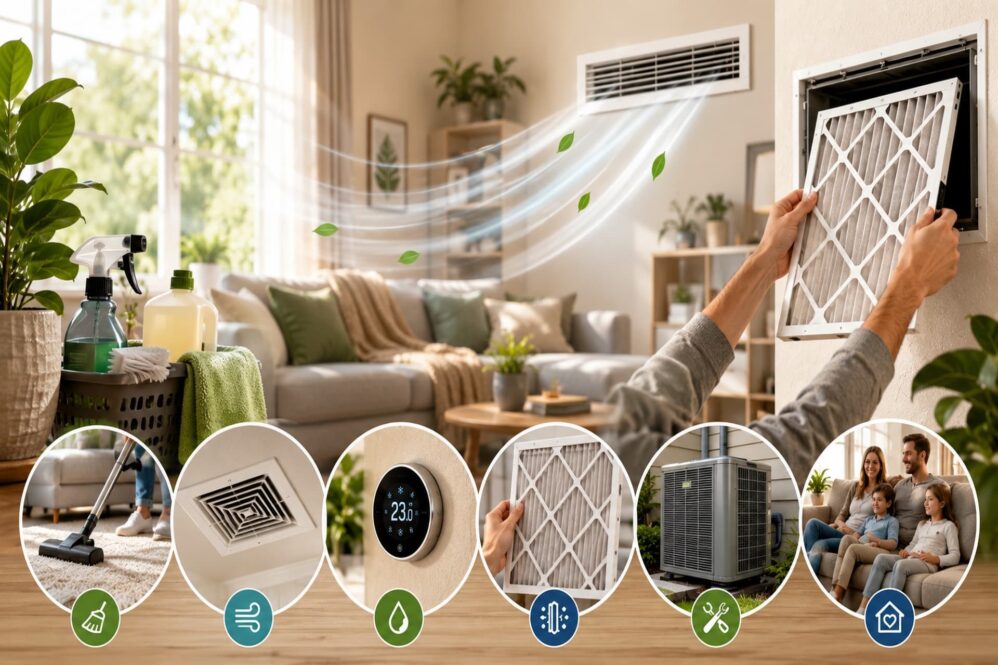
Routine HVAC maintenance helps reduce dust circulation while supporting healthier airflow. Changing filters regularly is one of the simplest and most effective ways to improve indoor air quality. Clean filters help trap dust, pollen, pet dander, and other airborne particles before they continue circulating through the home.
Professional inspections and seasonal servicing also help identify hidden problems such as mould growth, excessive moisture, airflow restrictions, or worn components that may affect both comfort and system efficiency.
Smart Cleaning Habits That Support Healthier Indoor Living
Regular cleaning plays an important role in reducing indoor pollutants and maintaining a healthier environment. However, cleaning routines become much more effective when they focus on areas that influence air quality as well as appearance.
Vacuuming carpets, rugs, and upholstered furniture with high-efficiency filters helps reduce dust and allergens that collect in soft surfaces. Hard floors should also be cleaned regularly to prevent dust from becoming airborne again through foot traffic or airflow.
Washing bedding, curtains, and soft furnishings can further reduce allergen buildup inside the home. In households with pets, frequent cleaning becomes even more important because pet hair and dander can quickly accumulate throughout indoor spaces.
Homeowners should also pay attention to overlooked areas such as ceiling fans, vents, baseboards, and return air grilles. Dust commonly collects in these locations and may continue circulating whenever the HVAC system operates.
Managing Humidity for Better Comfort and Cleaner Air
Humidity levels strongly influence indoor comfort and air quality. Excess moisture can create conditions that encourage mould growth, condensation, and musty odours, while overly dry air may cause irritation, dry skin, and discomfort.
Maintaining balanced indoor humidity helps create a healthier and more comfortable living environment year-round. In many homes, ideal humidity levels typically range between 30 and 50 percent.
Air conditioners naturally help remove some moisture from indoor air during warmer months, but additional solutions may sometimes be needed. Dehumidifiers can help control excessive moisture in damp areas such as basements, while humidifiers may improve comfort during dry winter conditions.
Proper ventilation in kitchens, bathrooms, and laundry rooms also plays a major role in reducing moisture buildup. Exhaust fans help remove humid air before it spreads throughout the home and contributes to indoor air quality problems.
Improving Ventilation Throughout the Home
Good ventilation helps bring fresh air into the home while removing stale indoor air, airborne pollutants, and excess moisture. Without proper airflow, indoor spaces can feel stuffy, humid, or uncomfortable even when temperatures appear normal.
Simple ventilation improvements can significantly enhance indoor comfort. Opening windows during favourable weather conditions encourages natural airflow and helps refresh indoor spaces. Using exhaust fans consistently in bathrooms and kitchens also prevents moisture and odours from lingering indoors.
Modern ventilation systems and air exchangers provide additional support for homes with limited natural airflow. These systems help maintain cleaner indoor air while improving energy efficiency and temperature consistency.
Homeowners should also ensure that vents and air returns remain unobstructed by furniture, rugs, or storage items. Blocked airflow can reduce HVAC efficiency and create uneven temperatures throughout the property.
Seasonal HVAC Maintenance Helps Prevent Larger Problems
Seasonal maintenance remains one of the most effective ways to protect both indoor comfort and long-term HVAC performance. Heating and cooling systems operate heavily throughout the year, and regular servicing helps prevent small issues from developing into expensive repairs.
Professional HVAC inspections often include checking airflow, cleaning coils, testing system components, inspecting refrigerant levels, and ensuring filters and ventilation systems are functioning correctly. These routine services help improve efficiency while reducing unnecessary strain on the equipment.
Homeowners can also perform simple maintenance tasks between professional visits. Replacing filters regularly, keeping outdoor units clear of debris, monitoring unusual noises, and checking thermostat performance all help support healthier system operation.
Consistent maintenance not only improves comfort but may also extend equipment lifespan and lower monthly energy costs over time.
Small Changes That Create Long-Term Health Benefits
Creating a healthier home environment does not require perfection. Small, consistent improvements often produce the greatest long-term results. Cleaner filters, better ventilation, balanced humidity, and regular cleaning routines all contribute to healthier indoor living conditions.
When HVAC care and home cleaning practices work together, homes typically feel fresher, cleaner, and more comfortable throughout every season. These habits also help reduce allergens, improve airflow, and support more efficient energy use across the property.
As awareness of indoor air quality continues growing, homeowners are increasingly recognising the importance of maintaining the systems and routines that support healthier living spaces every day.
Reader Questions
Q1. How often should HVAC air filters be replaced?
Most HVAC air filters should be replaced every one to three months. Homes with pets, allergies, or heavy HVAC usage may require more frequent filter changes for better airflow and cleaner indoor air.
Q2. Can poor ventilation affect indoor air quality?
Yes. Poor ventilation can trap moisture, dust, allergens, and stale air indoors. Proper airflow helps remove pollutants and improves overall comfort, freshness, and humidity balance throughout the home.
Q3. What humidity level is best for indoor comfort?
Indoor humidity levels between 30 and 50 percent are generally considered ideal. Balanced humidity helps reduce mould growth, improves comfort, and prevents overly dry indoor conditions.
Q4. Does regular HVAC maintenance improve energy efficiency?
Yes. Routine HVAC maintenance helps systems run more efficiently by improving airflow, reducing strain on components, and keeping equipment clean and properly adjusted throughout the year.
Q5. Why does dust return quickly after cleaning?
Dust often returns quickly when air filters are dirty, ventilation is poor, or dust collects in vents and soft surfaces. Improving airflow and maintaining HVAC systems can help reduce recurring dust buildup.
The Bottom Line
Creating a healthier home environment starts with simple daily and seasonal habits that improve indoor air quality and overall comfort. Regular cleaning, proper ventilation, balanced humidity, and routine HVAC maintenance all help keep indoor spaces cleaner, fresher, and more comfortable throughout the year. Small tasks such as changing air filters, improving airflow, and keeping vents clean can make a noticeable difference in both comfort and energy efficiency. By staying consistent with home cleaning and HVAC care, homeowners can enjoy healthier living spaces that are easier to maintain and more comfortable for the entire household.